Genting UK Flags Potential Closures for 13 Casinos Over Proposed Machine Games Duty Rise
Felix Foster · Oct 3, 2026

Genting UK Flags Potential Closures for 13 Casinos Over Proposed Machine Games Duty Rise
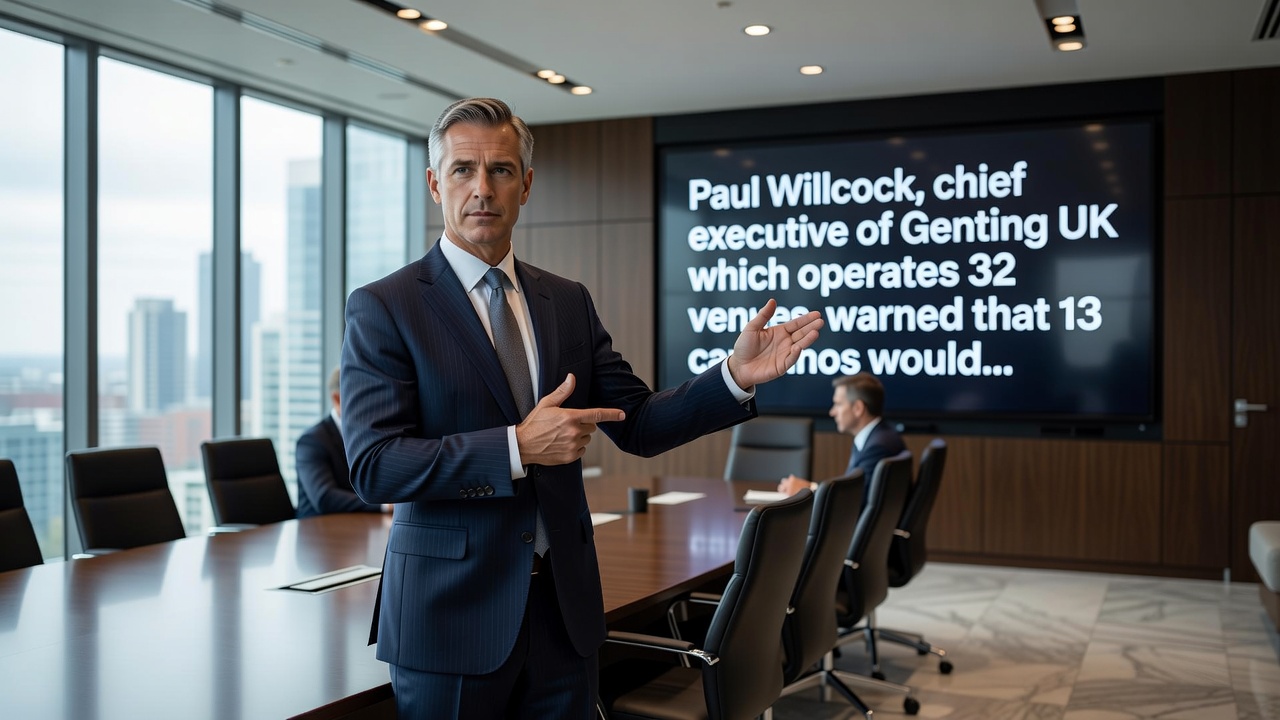
Paul Willcock, chief executive of Genting UK, which runs 32 casino venues across the country, issued a direct warning that 13 locations would turn unprofitable or unsustainable and require closure if the Chancellor doubles Machine Games Duty on slot machines and fixed-odds betting terminals from 20 percent to 40 percent during the October 28 Budget announcement. The change would place roughly 900 jobs in jeopardy while exceeding the company's most recent post-tax profit in total cost. This development follows a parallel statement from Rank Group, owner of Grosvenor Casinos, delivered the week before and traces back to a July proposal from the Social Market Foundation think tank.
Details of the Warning and Financial Impact
Willcock outlined the arithmetic in clear terms, noting that the tax adjustment would strip away viability from nearly 40 percent of Genting UK's sites because those venues already operate on narrow margins tied directly to machine revenue. Data from the operator shows the added burden would surpass its latest annual post-tax earnings, forcing a reevaluation of which properties can remain open without sustained losses. Observers note that the 32 venues currently employ thousands, so the projected 900 positions at risk represent a concentrated hit within the affected third of the portfolio.
Industry Context and Preceding Statements
Rank Group's earlier alert covered similar ground for its Grosvenor-branded properties, highlighting parallel exposure to the same duty increase and underscoring how multiple operators face identical margin compression. The Social Market Foundation first floated the 40 percent rate in July, framing it as a revenue-raising measure without detailing downstream effects on employment or site viability. Genting UK's response supplies concrete numbers that illustrate the proposal's reach when applied at scale.
Those figures include 13 specific closures out of 32 total sites, 900 direct jobs placed in question, and a financial hit larger than the company's most recent net profit after tax. The October 28 Budget timing places these calculations in the immediate spotlight for policymakers weighing the duty adjustment.
Operational Realities for Genting UK Venues
Genting UK maintains a network that spans major cities and regional locations, with machine gaming forming a core revenue stream alongside table games and hospitality. Willcock's assessment centers on the subset of sites where machine income accounts for the majority of cash flow, leaving little buffer once the duty rate climbs. The 20-to-40 percent shift would effectively double the tax take from those terminals, pushing cumulative operating costs beyond sustainable levels at the 13 venues identified.
Staffing implications extend beyond the headline 900 positions because ancillary roles in security, maintenance, and customer service often scale with overall site activity. Closure decisions would therefore ripple through local supply chains and nearby businesses that depend on casino footfall. The operator's statement stops short of naming the exact sites, yet the proportion affected equals roughly one in three properties in the current estate.
Timeline and Policy Background
The sequence began with the Social Market Foundation's July paper, continued through Rank Group's public response the prior week, and reached Genting UK's detailed projection ahead of the October 28 fiscal statement. Chancellor John Healey's Budget will determine whether the duty rate moves as proposed. Industry records show Machine Games Duty currently applies uniformly at 20 percent across qualifying terminals, so any doubling would represent the first structural change at this magnitude in recent years.
Financial modeling supplied by Genting UK indicates the extra liability would outstrip the company's latest full-year post-tax profit, creating an immediate capital constraint that could accelerate restructuring. The 900 jobs figure encompasses both full-time and part-time roles concentrated at the 13 at-risk venues, providing a measurable employment metric tied directly to the tax proposal.
Broader Effects on Licensed Operators
Multiple operators now face parallel exposure because Rank Group and Genting UK together represent a sizable share of the UK's land-based casino estate. The duty increase targets a revenue category that has grown in importance as operators diversify away from traditional table play. Without adjustments to cost structures or pricing, the higher rate would compress operating margins at precisely the venues that rely most heavily on machine income.
Willcock's statement supplies the first operator-specific quantification of closure risk and job impact, complementing Rank Group's earlier general warning. Both responses reference the same July think-tank proposal, creating a consistent factual thread across the sector.
Conclusion
The October 28 Budget decision will determine whether the Machine Games Duty rate advances from 20 percent to 40 percent, directly testing the forecasts issued by Genting UK and Rank Group. The documented outcomes include potential closure of 13 Genting sites, exposure of 900 positions, and a cost exceeding the company's most recent post-tax profit, all stemming from the single rate change first outlined by the Social Market Foundation in July. These projections remain on record as policymakers finalize the fiscal measures.