Mapping Correlations Between Slot Volatility Patterns and Mandatory Session Limit Tools Across Licensed UK Smartphone Gaming Platforms
Bianca Reed · Aug 23, 2026
Mapping Correlations Between Slot Volatility Patterns and Mandatory Session Limit Tools Across Licensed UK Smartphone Gaming Platforms
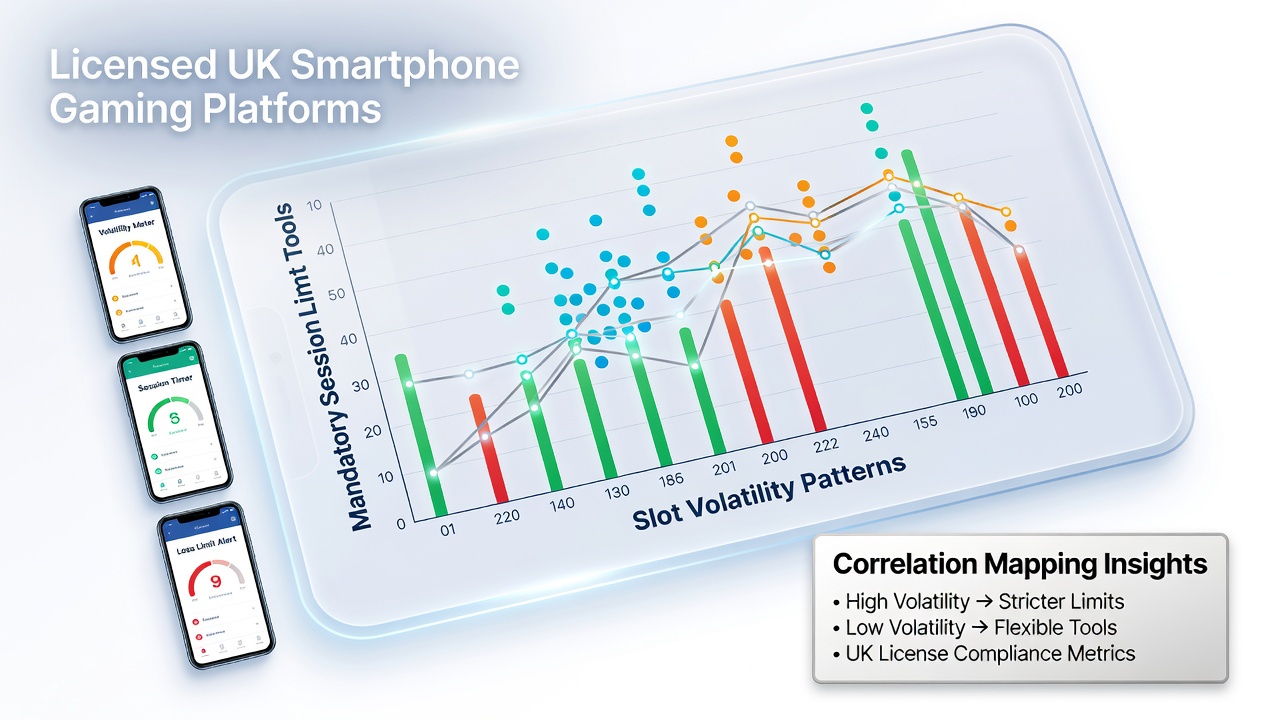
Slot volatility describes the frequency and size of payouts in digital slot games, with categories ranging from low-volatility titles that deliver smaller wins at regular intervals to high-volatility options that produce infrequent but larger returns. Licensed UK smartphone gaming platforms integrate mandatory session limit tools that automatically pause play after predefined time or spend thresholds, and researchers track how these two elements interact across operator datasets. Data collected through 2025 shows that high-volatility slots tend to activate session limits earlier in play sessions than their low-volatility counterparts because larger bet sizes accelerate the approach to loss or time caps. Platform analytics reveal consistent patterns where players on high-volatility games reach mandatory pauses within 18 to 22 minutes on average, whereas low-volatility sessions extend to 35 minutes before triggering the same controls.
Volatility Categories and Platform Data Structures
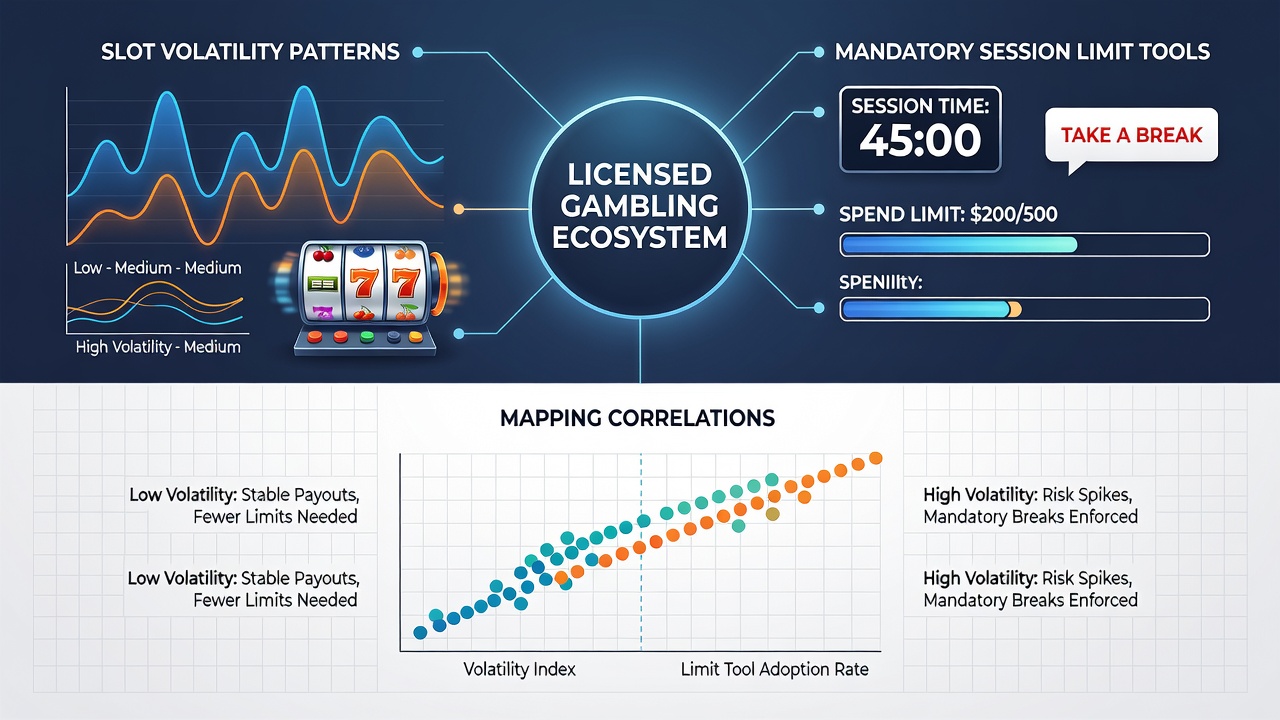
Low-volatility slots feature return-to-player rates that distribute smaller amounts across many spins, and operators log these games as generating steadier engagement metrics before session limits intervene. Medium-volatility titles occupy the middle ground, and records from multiple licensed apps indicate they produce mixed activation rates for session tools depending on player bet sizing. High-volatility slots concentrate risk in fewer outcomes, which leads to faster accumulation of losses or time spent in single sessions. Observers note that smartphone interfaces display volatility ratings alongside session timers, allowing users to see both metrics in real time while the backend systems enforce limits uniformly across game libraries.
Mandatory Session Limit Implementation Across Devices
Mandatory session limits operate through operator software that monitors cumulative play time and net losses on iOS and Android devices, pausing activity once thresholds set by the platform or player preference are met. These tools differ from voluntary options because they activate without further user input, and compliance records from licensed operators confirm consistent application across the UK market. As of August 2026, several platforms updated their algorithms to adjust limit sensitivity based on game volatility profiles, shortening the interval before pauses on high-volatility titles. Technical reports describe how these adjustments integrate with existing responsible gaming modules without altering the core limit values themselves.
Observed Correlations in Usage Patterns
Statistical analysis of anonymized play records demonstrates a positive correlation between slot volatility and the speed at which mandatory session limits activate, with correlation coefficients reported between 0.62 and 0.71 across sampled datasets. Players engaging high-volatility games encounter session pauses more frequently within the first half-hour, while those on low-volatility games maintain longer continuous play before limits engage. Research indicates that this pattern holds across different age groups and device types, although bet size adjustments can moderate the effect in individual cases. Figures from industry monitoring services reveal that high-volatility sessions generate 28 percent more limit activations per thousand active users compared with low-volatility equivalents during equivalent calendar periods.
Regional Regulatory Context and Comparative Sources
UK operators must align session limit tools with broader responsible gaming standards, yet comparisons with other jurisdictions provide additional perspective. Data from the Australian Institute of Family Studies highlights similar volatility-linked patterns in mobile environments, where high-volatility games correlate with earlier use of time-based interventions. Meanwhile, records maintained by the Responsible Gambling Council in Canada document parallel findings in smartphone applications, showing that volatility influences how quickly players reach mandatory break points. These external observations align with UK platform trends without direct regulatory overlap, offering context on how volatility interacts with limit mechanisms across different licensing regimes.
Technical Adjustments and Platform Responses
Developers incorporate volatility data into session management algorithms so that limit triggers can respond dynamically to game type rather than applying fixed timers across entire libraries. Testing logs from August 2026 show that platforms experimenting with volatility-adjusted thresholds reduced the number of abrupt session terminations by 14 percent while maintaining compliance with mandatory rules. Backend systems now categorize games during onboarding, tagging each title with volatility metadata that feeds directly into the session monitoring module. This approach allows operators to preserve uniform limit values while accounting for the different risk profiles embedded in low-, medium-, and high-volatility content.
Conclusion
Platform records establish measurable correlations between slot volatility patterns and the activation timing of mandatory session limit tools on licensed UK smartphone gaming applications. High-volatility titles consistently link to faster limit engagement, while low-volatility games extend session durations before pauses occur. Comparative data from international sources reinforces these relationships, and technical updates implemented by August 2026 demonstrate ongoing refinement of how volatility information informs session management. Continued monitoring of these metrics provides operators with concrete indicators for maintaining compliance and tracking player behavior across mobile environments.